For brands
How brands reach wholesale buyers beyond the metros
Most brands sell well in six cities and thinly everywhere else. Here is how wholesale buyers in smaller towns buy, and how to reach them without losing control of your price.
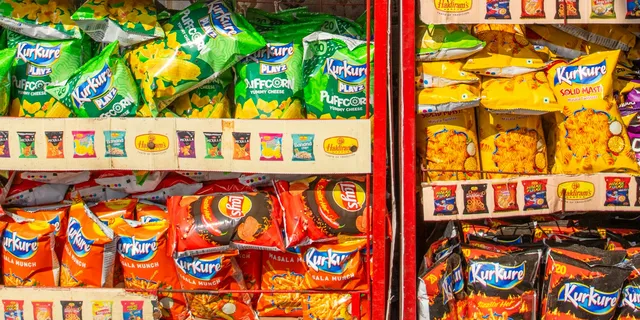
Most Indian consumer brands have a strong core: the metros, a few large retail chains and their own website. Outside that core, distribution gets thin fast. A product that sells well in Bengaluru may have no shelf in Hubballi, Nashik or Guwahati, not because nobody wants it but because nobody there is buying it from you.
This gap is a distribution problem, not a demand problem. Here is how buyers in smaller towns actually buy, and what it takes to reach them.
Who buys wholesale outside the metros
In tier 2 and 3 towns, branded stock usually moves through four kinds of buyer:
- Local wholesalers and stockists who supply kirana stores, chemists and cosmetic shops across a district.
- Value retail chains and single-city discount stores that buy in cartons and turn stock fast.
- Online resellers selling on Meesho, Instagram and marketplaces, many of them based in smaller towns.
- Institutional buyers: corporate gifting firms, hotel suppliers and salon chains that buy by the case.
Most of these buyers never meet a brand's sales team. They buy what reaches them through a distributor, a trade fair or a contact, and they pay attention to three things: the price per unit, the minimum order and how much shelf life is left.
Why brands don't reach them today
Three things get in the way:
- Cost to serve. Opening a new district with a distributor, a sales rep and trade schemes costs more than the first year of orders will return.
- Channel conflict. Brands worry that stock sold into a new town will turn up cheaply on Amazon or next to their existing retail partners.
- No visibility. Once stock leaves a distributor's warehouse, most brands can't see which town it reached, who bought it or at what price.
The result is that brands either stay inside their core or sell stock to a single trader and hope for the best.
What good distribution into new towns looks like
You don't need a sales team in every district to sell there. You need four things:
- Verified buyers, so you know every buyer is a registered business, not a consumer or a grey-market reseller.
- Your rules on every lot: a floor price, the regions and channels a lot can go to, and the right to approve each buyer before they see full details.
- Visibility after the sale: which buyer bought, in which town, at what price and in what quantity.
- Payment before goods move, so a new buyer in a new town is not a credit risk.
How this works on Lotvine
Lotvine Market is a members-only wholesale marketplace. Buyers register as businesses to see wholesale prices. Brands list lots with their own floor price, regions and channels, and approve every buyer. We handle the negotiation, documents and coordination, and you see every sale, buyer, town and price.
Many brands start with one lot: an overstocked line, a seasonal range or an older pack. It is a low-risk way to see which towns and buyer types want your product before you commit a sales team there.
A quick checklist before you open a new market
| Question | Why it matters |
|---|---|
| Which towns already search for your brand online? | Demand you are not serving yet |
| What minimum order suits a small-town wholesaler? | Too high and they can't buy |
| Which channels must this stock stay out of? | Protects your existing partners |
| What floor price protects your brand? | Stops underselling |
| Will you see where the stock ends up? | Without it you can't plan the next lot |
If you'd like to test a new region with one lot, see how selling on Lotvine works.
Written by
Lotvine team · Lotvine Market